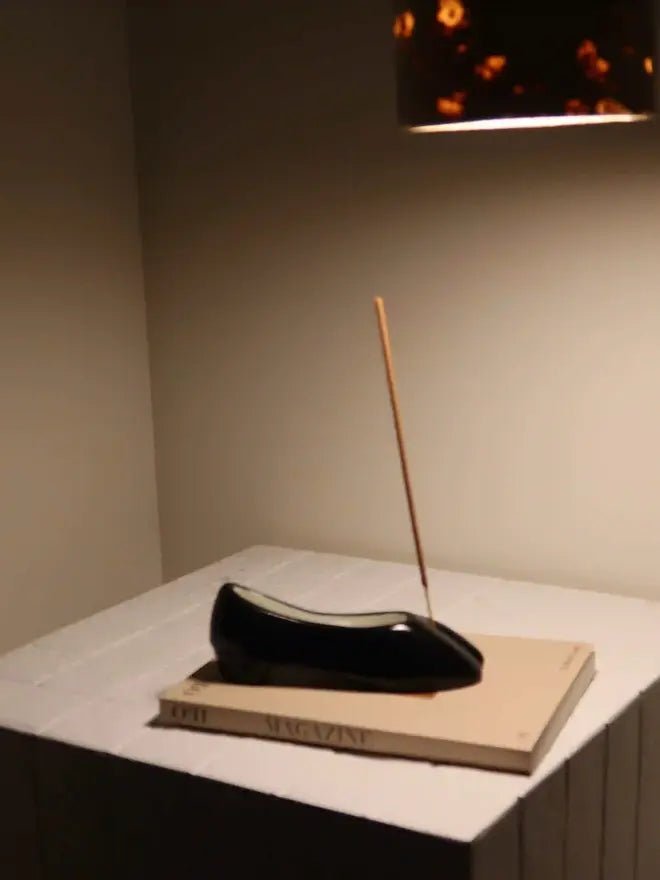
Tabi incense holder
Breath CeramicTabi Incense Holder: When Japanese Aesthetics Meet Modern Incense Rituals
By Ceramic Breath
In recent years, incense culture has moved far beyond traditional ceremonies and evolved into a modern lifestyle ritual. From calming evening routines to mindful workspace setups, incense has become a quiet companion to many who seek peace, inspiration, and a sense of grounding.
Among the new-generation designs, one piece stands out for its bold aesthetics and cultural story: the Tabi Incense Holder by Ceramic Breath.
Beautifully sculpted, finished in a deep glossy black, and shaped into the iconic Japanese tabi silhouette, this incense holder turns your incense ritual into an art form. In this article, we explore the meaning behind the design, how to style it, and why a handmade incense holder can elevate your daily life.


What Is a Tabi Incense Holder?
Inspired by the traditional Japanese tabi—a split-toe shoe historically worn by craftsmen, martial artists, and performers—the Tabi Incense Holder captures both elegance and cultural symbolism.
The Tabi shape is often associated with:
Balance
Groundedness
Movement and flow
A minimal but expressive design language
By transforming this iconic shoe form into a ceramic incense holder, Ceramic Breath merges cultural heritage with contemporary design, giving incense lovers a functional piece that also reads like a sculptural object.
Design Inspiration: From Tabi Shoes to Modern Home Decor
The Symbolism of Tabi
The divided-toe structure of the Tabi shoe is more than a fashion detail—it represents harmony between flexibility and stability. This duality makes it a perfect metaphor for incense rituals, which are rooted in calmness yet invite inner movement and reflection.
Ceramic Breath’s Modern Interpretation
Your Tabi incense holder features:
A sleek glossy black glaze
Soft, sculpted curves
A hollowed interior designed to collect ash neatly
A contemporary silhouette that borders art and utility
Every angle feels intentional, designed to draw the eye while blending seamlessly with modern, minimalist interiors.
The handmade finish is especially noticeable: subtle textures, natural glaze variations, and organic contours give each piece its own personality—something impossible to achieve through mass production.
Why Choose a Tabi Incense Holder?
1. A Statement Piece With Instant Attitude
While most incense holders are flat ceramic plates or wooden trays, the Tabi shape breaks the mold. Its sculptural form brings “display value” to any room—it's functional, but also something guests will definitely ask about.
2. Handmade Craftsmanship
Ceramic Breath emphasizes slow craft and handmade artistry. This means every Tabi incense holder has:
Slight variations in glazing
Soft, organic shaping
A unique character that cannot be duplicated
Handmade items carry emotional warmth—each piece becomes more than an object; it becomes a companion.
3. Designed for Stick Incense
The Tabi structure includes a carefully placed hole for securing stick incense, ensuring stability while burning.
Its interior shape also helps catch falling ash, keeping your table clean and making maintenance easy.
4. A Fusion of Cute, Cool, and Artistic
The Tabi form carries a playful charm while the black ceramic finish adds sophistication. It's a rare design that can be described as:
cute
cool
minimal
sculptural
aesthetic
Perfect for people who want to express personality through home decor.
Best Ways to Style Your Tabi Incense Holder
1. Minimalist Desk or Studio Setup
The glossy black surface of the Tabi incense holder creates a strong visual contrast on clean desks or stone tops.
Pair it with a single candle, small tray, or ceramic cup for a calm workspace ritual.
2. Japanese-Style or Zen-Inspired Corners
Place it alongside stones, wood accents, or neutral-toned ceramics to create a soft, meditative environment.
3. Shelf or Art Display
Because the Tabi piece looks like a miniature sculpture, it works beautifully on bookshelves or art ledges.
It becomes a decor object even when not in use.
4. Bedroom or Entrance Ritual
Let incense mark transitions—your morning routine, your return home, or your preparation for sleep.
The Tabi holder adds a touch of quiet intimacy to these moments.
Is the Tabi Incense Holder Handmade?
Yes—handmade is at the heart of Ceramic Breath.
Handmade Details You Can See
Natural variations in glaze flow
Subtle imperfections that make each piece organic
A sculpted form that feels alive
These elements remind you that real hands crafted this piece—something no machine can replicate.
Perfect for DIY & Creative Users
Handmade lovers also appreciate that ceramic pieces like this can be:
Repainted
Re-glazed
Customized
If you enjoy DIY culture, this incense holder gives you room to personalize your ritual space even more.
How to Use & Care for Your Tabi Incense Holder
How to Use
-
Insert your stick incense into the designated hole.
-
Place the holder on a stable, heat-resistant surface.
-
Light the tip, blow out the flame, and let the smoke rise gently.
How to Clean
Empty the ash after each use.
Wipe gently with a soft cloth.
Avoid abrasive tools that may scratch the glossy glaze.
Care Tips
Keep away from impact—ceramic can chip.
For long-term shine, wipe occasionally with a microfiber cloth.
Who Will Love This Tabi Incense Holder?
This piece is perfect for:
Fans of Japanese aesthetics
Lovers of unique, cool incense accessories
Minimalists who appreciate sculptural forms
Decor enthusiasts seeking something non-traditional
Supporters of handmade, small-batch ceramics
Anyone looking to elevate their incense ritual with meaning
Where to Buy the Tabi Incense Holder
You can explore the full incense holder collection—including the handmade Tabi piece—directly from Ceramic Breath.
Each ceramic creation reflects the brand’s philosophy:
slow craft, intentional living, and breathing art into everyday rituals.